
 Locations
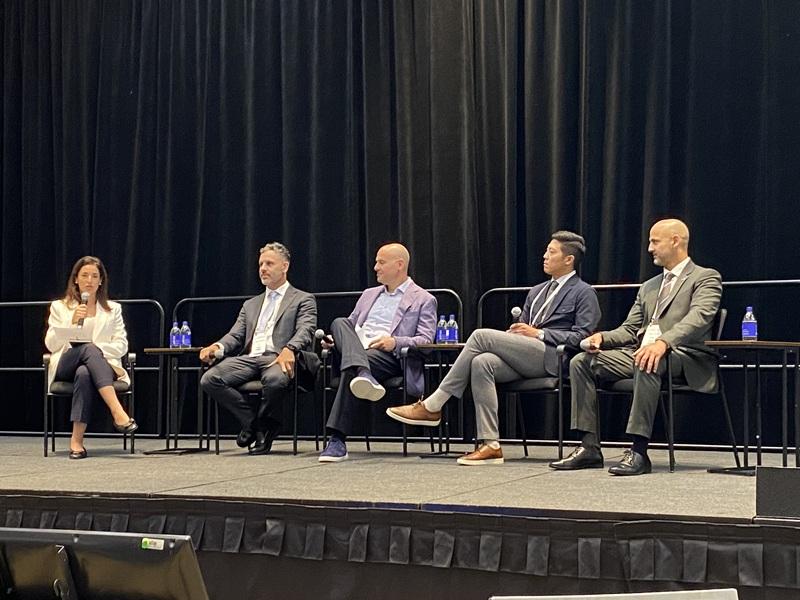




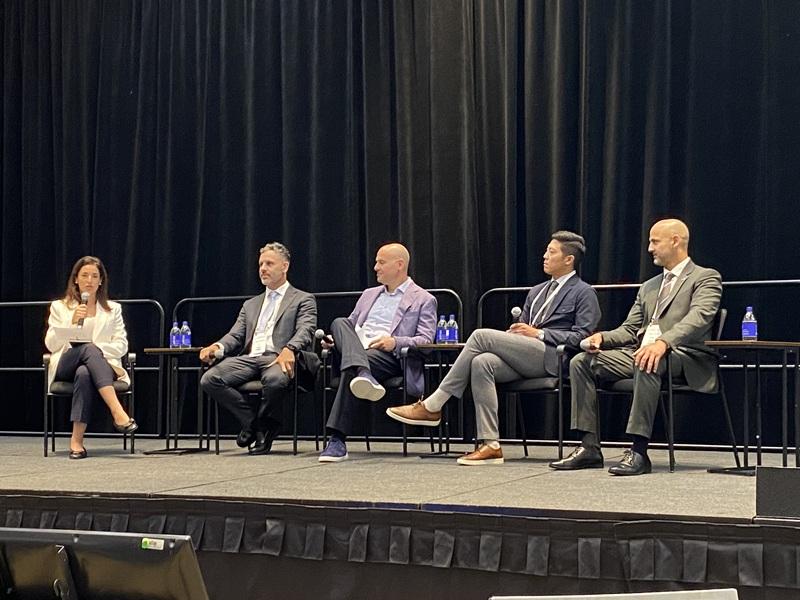
“Multifamily has always been the most stable of our asset classes, which is what investors love about it and why we were all caught by such surprise when, in 2024 and 2025, we started to see fundamentals eroding in this asset class,” RBC Capital Markets managing director Nurit Altman said to open a panel discussion she moderated during the Sept. 9 Canadian Apartment Investment Conference (CAIC) at the Metro Toronto Convention Centre.
“Availability started to rise and rents started to fall, driven by changes in immigration policy and increased supply in markets across Canada. This is a story that we all know too well.
“But what I’ve found fascinating about the last two years is that it hasn't been experienced in the same way in each market across the country. Some markets fared fairly well through 2025 and are only just starting to see softness in their fundamentals, whereas others have been through the storm and are starting to come out the other side.”
That was the backdrop for a discussion on how the Toronto, Vancouver, Montreal and Edmonton/Calgary apartment markets compare and contrast, with input from experts who work in those cities and know them well.
Toronto
JLL executive vice-president Michael Betsalel, the practice lead for the company’s multifamily Ontario team who also leads its national multifamily group, said rents in Toronto are down since 2025 but up since the first quarter of this year. Vacancies are lower since the first quarter, while capitalization rates and transaction dollar volume have both risen over the past year.
“There’s been a rotation back to value-add from new purpose-built rental,” said Betsalel.
“We have a tremendous amount of private capital and we have demand coming back from institutions. So, I think this is a normal part of the cycle,” he said later.
“In the Toronto market we’re seeing good institutional interest in new products,” said Altman. “We're seeing a number of Canadian institutions who maybe were building and have realized how challenging that part of the market is, and they see that they can buy a new product at close to replacement cost.”
The most successful apartment developments are those that add density to existing sites, where the land is free and there are economies of scale, said Betsalel.
Montreal
Thierry Samlal, principal partner for PMML’s real estate division, said vacancies in Montreal have risen from 1.5 to 2.9 per cent in six months and the prices of apartment buildings have increased slightly. Transaction dollar volume is up 25.4 per cent and cap rates have compressed.
Samlal said private investment groups in Montreal have a lot of capital and are active, while there are also succession and intergenerational transition deals happening.
“What drives our market and what drives the products is the liquidity that people have, and we're following capital right now in the market,” said Samlal.
Value-add properties and buildings constructed after 2017 are the most in demand for purchasers.
“There's a flight to quality but there's also a flight to capacity to increase rents,” said Samlal.
Vancouver
Goodman Commercial principal Mark Goodman said rents in Vancouver continue to fall while vacancies are at their highest rate in 20 years. Cap rates are rising.
“The biggest change comparing the first six months of 2026 to the same period last year have been dollar volumes,” said Goodman. “They’ve dropped 35 percent compared to last year and we're sitting at about 61 per cent below the 10-year average.
“Surprisingly, though, transactions are up 19 per cent because the market for larger, purpose-built new builds has dried up significantly. Investors are gravitating toward older vintage buildings.
“In fact, we haven't even seen a deal in the first six months hit $30 million. So it's been a dramatic change in sentiment in our market.”
Older wood-frame apartment buildings had long been favoured acquisition targets as value-add plays. The market then shifted to new, professionally managed rental towers with lots of amenities, but it has again returned to older and smaller wood-frame apartments.
The average size of building sold in the first six months of this year was just 26 units, and the average sale price was $9 million.
“The issue isn’t that there's no demand for the big, shiny, new, purpose-built towers,” said Goodman. “It's just that the owners won't sell for below replacement cost.”
New apartment buildings in Vancouver typically have to have an affordable below market rent component comprised of 20 to 30 per cent of units, which Goodman said is hampering development.
“I think inclusionary zoning has been the death knell to the industry,” he added. “If we could remove that, and allow the capital markets to build a healthy ecosystem, we’d have a better market.”
It’s not all bad news, however, Goodman concluded.
“Although we have some challenges right now, there's never been a better time to buy an apartment building in Vancouver. We've seen a complete reset with a 35 to 45 per cent drop in values in the last three years.”
Edmonton and Calgary
Brandon Imada, the Edmonton-based senior VP of multifamily for Avison Young, said rents in Alberta’s two largest cities are down, vacancies are up, transaction dollar volume has decreased and cap rates have remained stable.
“Our markets have primarily been high leverage markets and we've seen CMHC (Canada Mortgage and Housing Corporation) MLI Select financing for most deals,” said Imada.
“But in the past 12 months we've seen higher equity transactions take place for certain buyer groups out there, which is new to our markets and something that we love to see.”
Edmonton experienced strong population growth, which brought higher rents and apartment development. That population growth moderated and there’s now pressure to fill those new units, but Imada believes “the underlying economics of our market are set up well to eventually absorb this product.”
Imada said development is still feasible, but underwriting has become more stringent and exit assumptions have become more conservative.



 Industry Events
 Locations